
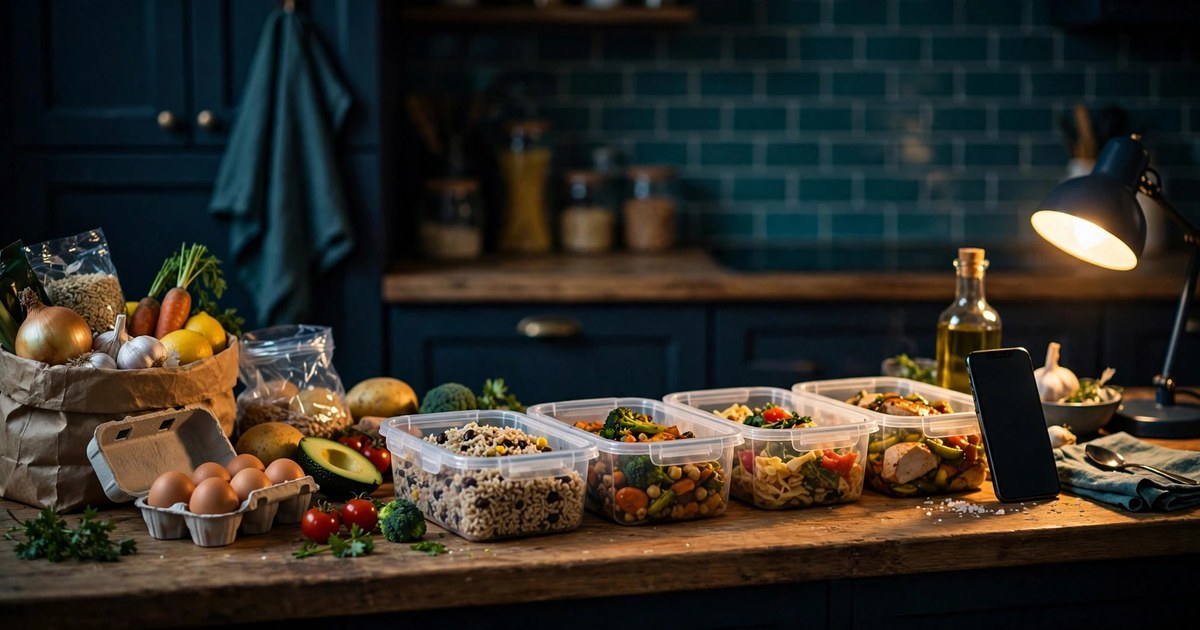
Let's skip the lecture. If you're reading about meal planning on a tight budget, you already know money's tight. What you need is supper on the table seven nights this week without the 6 PM panic and without the grocery bill quietly doubling.
Here's what nobody says out loud: the expensive part usually isn't the food. It's the decisions — the last-minute takeout because nobody could agree, the ingredients bought for one meal and left to rot, the third store trip this week. A free AI tool earns its keep here: not as a fancy chef, but as someone who does the math before you spend the money.
Start With What You Actually Have
Two honest minutes of inventory before you touch the AI:
- List your pantry and freezer staples. Actual ones — rice, pasta, canned tomatoes, frozen veg. Write it down.
- Check what's genuinely cheap this week. The flyer, the clearance rack, the store brand. Actually cheap, not just "on sale" in big red letters.
AI can't save you money on ingredients you don't have — but it's very good at building meals around the cheap stuff instead of starting from a recipe that needs twelve new things.
The Prompt That Does the Work
"Build 7 simple dinners for 2 adults and [number] kids using these pantry staples I already have: [your list]. These items are cheap at the store this week: [your list]. Rules: every dinner under 30 minutes of active cooking, reuse ingredients across meals so nothing goes to waste, nothing fancy, kid-friendly. Then give me a shopping list of ONLY what I still need to buy, with rough quantities."
That last line is the money move: a shopping list of only what you still need. Most meal plans hand you seven recipes and a 40-item list. This starts from what you own and only adds the gaps. The difference on the receipt is real.
The "Use It Up" Night
One dinner a week is officially clean-out-the-fridge night. Stir fry, fried rice, soup, quesadillas, breakfast for supper — these aren't recipes, they're formats that absorb whatever's left: the half onion, the wilting celery, the rice from Tuesday. Stuck? Ask:
"I have [leftovers list]. Give me 2 'use it up' dinner ideas — stir fry, soup, or fried rice style — that use all of it. Nothing wasted."
Food waste is money you already spent and then threw away. One use-it-up night a week catches everything that used to rot in the crisper.
Stop Chasing Variety
Nobody needs 30 different dinners. Find 8 to 10 meals your family actually eats without complaint, and rotate them. Tacos. Spaghetti. Stir fry. Sheet-pan chicken. Soup and grilled cheese. Done.
Variety is a luxury purchase. When money's tight, repetition is a strategy — same staples in bigger quantities, you get fast at making them, and there's always something in the house for "that" meal. Tell the AI to keep your winners in the rotation:
"Add [meal] to my regular rotation. Next week's plan should include at least 4 of my rotation meals: [list them]."
Two Honest Notes
First: AI prices go stale. If it says chicken thighs "should be" $2 a pound and your store says $4, your store wins. Use AI for the planning — the combining, the portioning — and your own eyes for the prices.
Second: some weeks the math just doesn't work, and no prompt fixes that. If you're in one of those weeks, the food bank exists for exactly this — that's what it's there for, no shame in it. This post is about stretching dollars, not pretending every week is stretchable.
The Bottom Line
Feeding a family on little money isn't a willpower problem — it's a planning problem, and planning is what AI is good at. Inventory what you have, note what's cheap, let the prompt build the week, keep one use-it-up night, rotate your winners.
Ten minutes on Sunday. Seven suppers handled. That's one less thing to carry.
Disclosure: This post contains affiliate links. If you buy through them, I may earn a commission at no extra cost to you.







Comments (0)
No comments yet — be the first. Comments are moderated, so yours will show up after a quick review.